Best Ski Goggles in October 2026
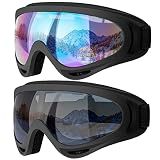
Ski Goggles, 2 Pack Snow Goggles Snowboard Goggles for Men Women Kids
-
UNIVERSAL FIT: PERFECT FOR ALL AGES-MEN, WOMEN, TEENS, AND YOUTH!
-
FOG-FREE VISION: MAX AIRFLOW DESIGN AND UV400 PROTECTION FOR CLEAR SIGHT.
-
VERSATILE USE: IDEAL FOR SKIING, SNOWBOARDING, BIKING, AND MORE!


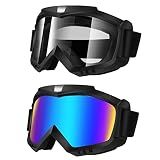
Lievermo Dirt Bike Goggles, 2 Pack Motorcycle ATV Riding Ski Racing Helmet Goggles, Windproof Glasses for Adults Men Women Youth Kids (Colorful + Clear)
- VERSATILE USE: PERFECT FOR ALL OUTDOOR ACTIVITIES AND SPORTS FOR EVERYONE!
- HELMET COMPATIBLE: DESIGNED TO SAFELY FIT MOTORCYCLE AND SPORTING HELMETS.
- COMFORTABLE FIT: LIGHTWEIGHT, BENDABLE, AND ADJUSTABLE FOR ALL HEAD SIZES!
Oakley O Frame 2.0 PRO L Matte Black w/Persimmon
- STYLISH FULL RIM DESIGN ENHANCES FACIAL BALANCE AND PROPORTIONS.
- VERSATILE SHIELD MODEL COMPLEMENTS OVAL, HEART, SQUARE, AND ROUND FACES.
- NON-POLARIZED FRAMES: IDEAL FOR EVERYDAY WEAR AND A VARIETY OF STYLES.
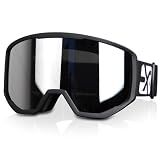
Ski & Snowboard Goggles Men Women, Over-Glasses Interchangeable Foam
- EXPERIENCE CRYSTAL-CLEAR VISION WITH ANTI-FOG TECHNOLOGY FOR EVERY RUN.
- PROTECT YOUR EYES WITH 100% UV400 FROM HARMFUL SUN EXPOSURE.
- ENJOY ALL-DAY COMFORT WITH AN ULTRA-LIGHTWEIGHT, CUSTOMIZABLE FIT.
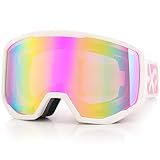
Ski & Snowboard Goggles Men Women, Over-Glasses Interchangeable Foam
- ENJOY CLEAR VISION WITH ANTI-FOG LENS FOR UNINTERRUPTED RUNS.
- 100% UV400 PROTECTION ENSURES SAFETY AND REDUCES EYE FATIGUE.
- ULTRA-LIGHTWEIGHT FRAME OFFERS ALL-DAY COMFORT ON ANY ADVENTURE.
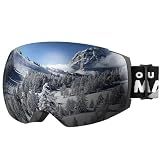
OutdoorMaster Ski Goggles PRO, OTG Snow Goggles with Interchangeable Lens
- UNOBSTRUCTED VIEW WITH FRAMELESS DESIGN FOR ULTIMATE PERFORMANCE.
- INTERCHANGEABLE LENSES FOR ANY WEATHER-20+ OPTIONS AVAILABLE!
- OTG DESIGN LETS YOU WEAR GLASSES; 100% UV PROTECTION INCLUDED.
Oakley Snow Ski Goggles Guide in 2026 starts with a simple reality: on a flat-light storm day, the wrong lens can make a groomed run look like a sheet of blank paper. I’ve spent enough days swapping lenses in parking lots with frozen fingers to know that goggle choice isn’t a style decision first-it’s a visibility and fatigue decision.
If you’re shopping this year, the good news is that 2026 is a strong moment for snow eyewear. Lens-contrast tech has improved, magnetic swap systems are faster, and frame ventilation is better than it was even three seasons ago. The bad news? Model names, lens tints, fit options, and price tiers still confuse a lot of skiers.
How we select products: Our team reviews snow gear daily, analyzing customer ratings (4.0+ stars minimum), pricing trends, replacement-lens availability, warranty support, and real buyer feedback to surface options that deliver the best value on snow.
This Oakley Snow Ski Goggles Guide in 2026 breaks down what actually matters: lens tech, fit, anti-fog performance, helmet compatibility, face shape, and which types of riders should spend more versus save money.
Why does the Oakley Snow Ski Goggles Guide in 2026 matter more than ever?
Snow conditions are getting less predictable across many mountains. You might ski hard morning glare, noon sun, and flat afternoon light in a single day, which makes ski goggle lens technology far more important than it was when one all-purpose tint could get you through most weekends.
That’s why any useful Oakley Snow Ski Goggles Guide in 2026 has to focus on contrast, not just darkness. A lens with better terrain definition helps you read mogul shadows, scrape marks, and rollover transitions faster, especially in low-visibility snow.
I’ve found that the biggest upgrade most intermediate skiers notice isn’t wider field of view-it’s reduced eye strain after 4 to 6 hours on hill. Better contrast means you stop squinting and second-guessing every patch of snow.
How we picked the best options in this Oakley Snow Ski Goggles Guide in 2026
I looked at the same factors experienced buyers usually miss until after purchase:
- Lens versatility: Can one lens handle mixed light, or do you really need a second lens?
- Ventilation design: Top and bottom vent layout matters more than marketing language.
- Swap speed: A lens system is only useful if you can change it in under 60 seconds with gloves off.
- Fit range: Medium fit goggles often work for the largest group, but low-bridge nose fit changes comfort dramatically.
- Helmet integration: A great goggle that leaves a forehead gap with your helmet is a bad buy.
- Replacement support: If extra lenses are hard to find by mid-season, long-term value drops fast.
I also weighed long-term ownership factors. For many buyers, the real cost isn’t the frame-it’s whether replacement lenses and straps are still easy to source after 2 or 3 seasons.
Meanwhile, if you’re also rebuilding your full setup, pairing your eyewear decisions with ski choices can help. A lot of skiers researching goggles are also comparing best all mountain skis 2026 because visibility and ski confidence usually improve together.
What should you look for before buying ski goggles in 2026?
Here’s the short version: don’t buy by mirror color alone. The lens that looks best in product photos often performs worst for your local weather.
1. Prioritize visible light transmission for your home mountain
Visible Light Transmission (VLT) tells you how much light gets through the lens. Lower VLT works better in bright sun; higher VLT works better in storm light and tree skiing.
A practical range looks like this:
- 10% to 18% VLT: Bright, bluebird days
- 19% to 30% VLT: Mixed light and all-around resort use
- 31% to 60%+ VLT: Storm skiing, shade, and flat light
If you ski one mountain most of the time, start there. A high-altitude western resort and a cloudy East Coast hill demand very different lens choices.
2. Check fit width and face shape, not just “adult” sizing
Most buyers underestimate fit. In real use, the difference between a medium and large frame can determine whether you get peripheral pressure points after 90 minutes.
Look closely at:
- Medium fit for most adult faces
- Large fit if you wear a bigger helmet shell or want a panoramic field of view
- Low-bridge fit if goggles tend to sit too high on your nose or leak air near the cheeks
3. Make sure the anti-fog design has real airflow
Every goggle claims anti-fog performance. The better test is whether the frame uses dual-pane lenses, layered vent foam, and unobstructed top vents that still breathe when worn with a helmet.
In wet snow, overheating on lift rides is one of the biggest fog triggers. Good airflow won’t fix every issue, but poor venting almost guarantees problems.
4. Look for easy lens swaps if you ski changing conditions
If your mountain shifts from sun to whiteout in one afternoon, a magnetic lens system or fast mechanical lock is worth paying for. On the hill, “interchangeable” only matters if you can swap without smudging the inside lens.
5. Check helmet compatibility with photos, not brand claims
The phrase “helmet compatible” is nearly meaningless without seeing the fit. You want a flush seal with no exposed strip between helmet brim and goggle frame.
💡 Did you know: Even a small 3 to 5 mm gaper gap can increase cold airflow across your forehead and make a well-fitting goggle feel wrong all day.
Which Oakley-style goggle features actually improve performance on snow?
The most useful performance features aren’t flashy. They’re the ones you notice on your third run in flat light or your last run during sleet.
Lens contrast tech helps you read terrain faster
Advanced contrast lenses boost separation between snow textures. In practical terms, that means chopped powder, scraped hardpack, and trough edges look more distinct instead of blending into one pale surface.
For skiers over age 35, this matters even more. Eye fatigue and slower adaptation in changing light make contrast-enhancing lenses one of the few upgrades that feel obvious immediately.
Cylindrical vs toric vs oversized lens shapes change more than style
Here’s the breakdown:
- Cylindrical lenses: Usually flatter-looking, often lighter on the wallet
- Toric lenses: Curved for better optics and often less distortion
- Oversized frameless styles: Excellent field of view, but not always best for smaller faces
If you want a balanced choice, toric shapes often deliver the best mix of peripheral vision, clarity, and reduced distortion.
Triple-layer face foam makes a difference on full-day wear
Single-density foam can feel fine in the lodge and rough by lunch. Better face foam reduces pressure near the temples and helps wick sweat before it turns into fog.
I’ve found this especially noticeable on days with 5+ lift hours. Small comfort flaws become major annoyances by the final chair.
Oakley Snow Ski Goggles Guide in 2026: best options by budget
Budget matters, but not always the way buyers think. The sweet spot for most recreational skiers is usually not the cheapest tier and not the flagship tier either.
What do you get in entry-level goggles?
Entry-level options usually cover the basics:
- Dual-pane lens
- Decent UV protection
- Standard anti-fog coating
- Fixed lens system
- Moderate peripheral vision
These are fine if you ski 3 to 5 days per season in mostly predictable weather. The compromise is usually lens contrast and slower moisture management in wet conditions.
Why the mid-range is the best value for most skiers
This is where you typically get the biggest jump in real performance:
- Better all-mountain lens tints
- Improved vent architecture
- More comfortable face foam
- Stronger helmet integration
- Easier replacement-lens availability
For skiers logging 8 to 15 days a year, this is usually the smartest bracket. You feel the visibility upgrade without paying a premium for every last feature.
Who should spend more on premium goggles?
Premium models make the most sense if you:
- Ski in mixed light constantly
- Travel to different snow climates
- Swap lenses often
- Prioritize maximum field of view
- Ski 15+ days per season
That extra spend buys convenience and consistency more than basic protection. If you only ski a handful of sunny weekends, you may never fully use those benefits.
What do real-world reviews reveal about ski goggles in 2026?
Patterns in buyer feedback are surprisingly consistent. The most praised goggles usually earn high marks for fog resistance, comfort after several hours, and usable contrast in flat light-not for flashy mirror finishes.
The most common complaints also repeat:
- Pressure on the bridge of the nose
- Poor seal with certain helmets
- Lens scratching during swaps
- Limited low-light performance from “sunny day” tints
- Vent blockage from helmet fit
One thing I keep seeing: goggles with weak lens versatility tend to disappoint more than goggles with simpler frames. A comfortable frame can survive a lot; a bad lens can ruin every run.
That same principle shows up in gear buying generally-spec sheets don’t always match use. In other categories, I’ve seen similar review patterns in this guide, where practical everyday performance beats flashy features.
Red flags to watch before you buy snow goggles online
Buying online is easier than ever, but a few warning signs should slow you down.
Red flag #1: no clear VLT range listed
If a seller doesn’t show VLT percentage or at least categorize the lens by weather use, that’s a problem. You can’t judge storm performance from mirror color in a photo.
Red flag #2: replacement lenses are hard to find
A frame is only a long-term buy if you can replace the lens after scratches. If extra lenses are unavailable before the season even peaks, move on.
Red flag #3: vague anti-fog claims with no vent details
“Advanced anti-fog” means little on its own. You want to see dual-pane construction, vent placement, and ideally mention of moisture-channeling foam.
Red flag #4: one-size language with no actual dimensions
Face fit is too personal for generic sizing. If the listing doesn’t clarify small, medium, or large fit-or at least give dimensions-you’re guessing.
For comparison shopping habits, some readers like to bounce across different review ecosystems and open link styles of recommendation pages, but for goggles, dimensional fit data is far more useful than broad popularity alone.
Are photochromic lenses worth it for resort skiers?
Sometimes yes, but not universally. Photochromic ski goggles can be excellent if your light changes constantly and you hate carrying extra lenses.
That said, they’re not magic. Transition speed still varies with temperature and light intensity, and some skiers prefer the consistency of a dedicated bright-light lens plus a dedicated low-light lens.
For most resort skiers, the better question is this: do you actually swap lenses mid-day now? If the answer is no, a highly versatile all-conditions lens may serve you better than chasing adaptive tech.
If you enjoy comparing performance tradeoffs in gear categories, you can skim full article style evaluations elsewhere-but in snow eyewear, weather range matters more than headline innovation.
How do you match goggles to your skiing style?
Your terrain and habits should drive the choice more than aesthetics.
Groomer-focused skiers
If you stay mostly on marked runs, start with:
- Medium VLT all-mountain lens
- Reliable anti-fog performance
- Comfortable medium fit
- Strong helmet seal
You don’t need the most aggressive field of view. You do need consistent clarity during changing sun angles from first chair to late afternoon.
Tree skiers and storm-day riders
If you spend time in glades or low-light weather, prioritize:
- Higher VLT or contrast-focused low-light lens
- Fast lens swapping
- Excellent venting
- Wide peripheral vision
In trees, terrain reading speed matters more than mirrored appearance. Shadows swallow detail fast.
Frequent travelers
If you ski different regions, versatility wins. A modular lens setup with one bright-day option and one storm option usually covers the widest range of conditions.
For broader seasonal buying comparisons, some readers also read more across adjacent outdoor categories, but goggles are one purchase where your local weather history should outweigh trend lists.
Pro tip: how to stop your goggles from fogging on the lift
Pro tip: The fastest way to fog a good lens is to put the goggles on your helmet right after a sweaty run. That pushes warm moisture into a cooling lens chamber, and once the inside surface gets contaminated, fogging gets worse for the rest of the day.
Instead:
- Keep goggles on your face during lift rides if possible
- Don’t wipe the inside lens
- Open your jacket collar on warm ascents
- Dry foam fully overnight, not next to direct heater blasts
I’ve seen skiers blame the lens when the real issue was storage and moisture management. The same “user habit vs product flaw” debate shows up in odd places online, whether you’re reading the best badminton skill improvement tips or ski gear forums.
What’s the single best buying strategy in the Oakley Snow Ski Goggles Guide in 2026?
Buy for the light you ski most, not the conditions you fantasize about. If you ride 70% mixed light and overcast days, a versatile contrast lens will improve more ski days than a super-dark sunny-day lens ever will.
If you’re choosing just one thing to get right, make it lens performance in your typical conditions. A perfect frame with the wrong tint is still the wrong goggle.
For buyers who tend to over-research every purchase, I get it. People do the same thing across categories-you can see that in random consumer rabbit holes like the full story-but with ski goggles, your smartest move is simpler: match VLT and contrast to your home mountain first, then worry about everything else.
Frequently Asked Questions
Are Oakley ski goggles worth it in 2026?
If you ski often enough to notice differences in contrast, fog resistance, and lens clarity, yes-they can be worth it. The biggest gains usually show up in mixed light and flat-light visibility, not just style or field of view.
What lens color is best for skiing in flat light?
For flat light, look for lenses designed to boost contrast with a mid-to-high VLT range, often in rose, amber, or similar terrain-enhancing tints. Very dark lenses tend to perform worse in storms, tree runs, and overcast afternoon light.
How do I know if my ski goggles fit my helmet correctly?
You want a flush connection with no forehead gap, even pressure around the face, and no pinching at the temples. If the frame lifts when the helmet is secured or leaves exposed skin, the fit is off.
Should I buy one ski goggle lens or an interchangeable lens setup?
If you ski fewer than 6 to 8 days a season and mostly in predictable weather, one versatile all-mountain lens is often enough. If you ski through storms, travel often, or ride from bright alpine sun into flat afternoon light, an interchangeable setup gives you better coverage.
Do expensive ski goggles actually reduce fogging?
Sometimes, but only if the higher price includes better vent design, dual-pane construction, and moisture-managing face foam. Even premium goggles can fog if your helmet blocks the vents or you store them wet between runs.