
Best Python Data Structures Books in October 2026
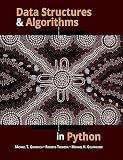
Data Structures and Algorithms in Python
- AFFORDABLE PRICES: QUALITY READS WITHOUT BREAKING THE BANK!
- ECO-FRIENDLY CHOICE: PROMOTE SUSTAINABILITY WITH EVERY PURCHASE.
- UNIQUE FINDS: DISCOVER HIDDEN GEMS AND RARE TITLES.


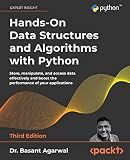
Hands-On Data Structures and Algorithms with Python: Store, manipulate, and access data effectively and boost the performance of your applications, 3rd Edition
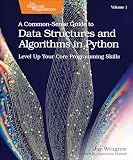
A Common-Sense Guide to Data Structures and Algorithms in Python, Volume 1: Level Up Your Core Programming Skills
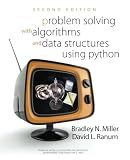
Problem Solving with Algorithms and Data Structures Using Python 2nd Edition
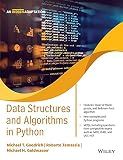
Data Structures and Algorithms in Python
- MASTER PYTHON FOR EFFICIENT DATA HANDLING AND PROBLEM SOLVING.
- COMPREHENSIVE GUIDE WITH REAL-WORLD EXAMPLES AND EXERCISES.
- BOOST CAREER PROSPECTS WITH IN-DEMAND CODING SKILLS.
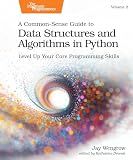
A Common-Sense Guide to Data Structures and Algorithms in Python, Volume 2: Level Up Your Core Programming Skills
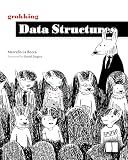
Grokking Data Structures
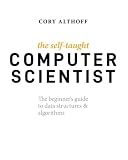
The Self-Taught Computer Scientist: The Beginner's Guide to Data Structures & Algorithms
Fundamentals of Python: Data Structures (MindTap Course List)
Data Structure and Algorithmic Thinking with Python: Data Structure and Algorithmic Puzzles
- MASTER PYTHON FOR EFFECTIVE DATA STRUCTURE OPTIMIZATION!
- ENHANCE ALGORITHMIC THINKING FOR REAL-WORLD APPLICATIONS.
- LONG-LASTING SKILLS FOR ENDURING CAREER SUCCESS!
If you've ever tinkered with graph algorithms, you've encountered the legendary BFS and DFS. Fast forward to 2026, and the landscape of these algorithms in Python is more exciting than ever. How to Run BFS and DFS in Python in 2026 is no longer just a technical exercise-it's a gateway to solving real-world problems efficiently. But why should you care? Because these algorithms are the heartbeats of countless applications, from AI pathfinding in games to optimizing your favorite search engines. Ready to unravel the mystery and power up your projects? Let's dive in!
Understanding BFS and DFS: The Basics
Before exploring how to run BFS and DFS in Python, it's crucial to grasp what they do. Breadth-First Search (BFS) is your go-to for exploring nodes layer by layer. It's a methodical way to traverse neighbouring vertices, perfect for finding the shortest path on unweighted graphs. Depth-First Search (DFS), on the other hand, dives deep along branches, making it ideal for maze or puzzle solutions.
Both BFS and DFS are fundamental for any programmer. Here's why:
- Versatility: From networking to artificial intelligence, these algorithms solve complex problems.
- Efficiency: Implementing these correctly can drastically reduce computational costs.
- Problem-Solving: Mastering them refines your logical and analytical skills, essential for tackling any coding challenge.
Running BFS and DFS in Python: What to Look For
Interested in running BFS and DFS in Python in 2026? Here’s a breakdown of key features and considerations:
- Libraries and Tools: Choose flexible libraries that make Python implementations smooth, like NetworkX.
- Scalability: Ensure your code can handle large datasets without performance lag.
- Customization: Look for options that allow easy tweaking, such as modifying traversal order.
- Integration: Good code can integrate other datasets or applications seamlessly.
By focusing on these, not only do you enhance algorithm efficiency, but you also future-proof your code for upcoming trends.
Benefits of Mastering BFS and DFS
So, why is mastering BFS and DFS worth your time and effort?
- Optimization: Efficient traversal leads to quicker problem-solving, saving time and resources.
- Application Diversity: From social networks to routing algorithms, your skills apply across domains.
- Career Advancement: Graph algorithms are highly sought after, making you a valuable asset in tech fields.
Connecting algorithm features to real-life outcomes ensures that the time you invest in learning yields substantial returns.
Pro Tips for Running BFS and DFS
Let's talk strategy. Here are some expert recommendations for enhancing your BFS and DFS execution:
- Use Iterative Methods: Recursion can lead to stack overflow issues in large datasets. Opt for iterative implementations when possible.
- Data Structure Choice: A queue is ideal for BFS, while a stack suits DFS.
- Optimize Memory Usage: Be mindful of memory consumption; use structures like sets for visited nodes.
- Debugging and Testing: Continuously test using Python’s unittest or Pytest to catch logical errors early. Explore more about Python's testing capabilities here.
💡 Did you know: When using BFS for memory-intensive tasks, leveraging deque from Python’s collections module can significantly optimize performance.
Your Next Steps: Implementing BFS and DFS
Ready to get hands-on? Here’s how to start:
- Set Up Your Environment: Ensure Python and necessary libraries like NetworkX are installed.
- Define Your Graph: Choose a representation method-adjacency list is a popular choice for its efficiency.
- Write the Algorithm: Begin with a basic structure and test with small datasets.
- Iterate and Improve: Continuously refine your code for better performance and readability.
To make the most of your learning journey, consider diving into Python GUI customizations to create visual representations of your BFS and DFS processes.
Frequently Asked Questions
How do you implement BFS in Python?
Implementing BFS in Python involves using a queue to explore node neighbors layer by layer. The process typically includes maintaining a list of visited nodes to prevent re-exploration.
What is DFS used for in Python programming?
DFS is great for scenarios requiring the exploration of all paths, like puzzle solving or pathfinding. It efficiently traverses the entire graph, diving deep into paths before backtracking.
Why choose Python for BFS and DFS in 2026?
Python remains a top choice due to its robust libraries, ease of understanding, and community support, which simplify complex algorithm implementations.
How can I optimize BFS performance?
To enhance BFS performance, use efficient data structures like deque for the queue, minimize memory usage, and ensure the algorithm scales well with larger graphs.
What are common mistakes when running DFS in Python?
Common DFS errors include unnecessary recursive calls leading to stack overflow, neglecting to track visited nodes, and improper graph representation choices.
By now, you're well-equipped to conquer BFS and DFS in Python, transforming theoretical skills into practical expertise. Whether you're optimizing algorithms for work or personal projects, the journey is as rewarding as the destination. Ready to code? Let's make it happen!